
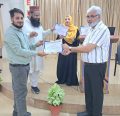
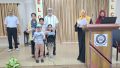
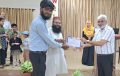
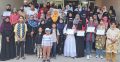
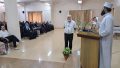
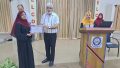
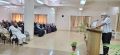
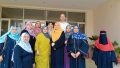
Closing ceremony of non B.ed. One-Month Community Service Programme
Al-Barkaat Institute of Education organized one-month Community Service Programme ‘Teaching for Transformation’ for non-B.Ed. in-service and pre-service teachers from May 02- 26, 2026 on hybrid mode. This programme was in alignment with NAAC SSR Criterion III, particularly the extension and outreach dimensions under Research, Innovations and Extension
As per ABIE’s documented academic and co-curricular practices, community need-based outreach programmes are treated as an important component of institutional activity. Furthering these practices ABIE made efforts to connect teacher development with reflective, socially responsive, and transformative educational practice through this programme.
This one-month Community Service Programme began with an induction outlining its objectives, structure, and expected outcomes, and proceeded through a series of sessions covering human growth and development and their implications for teaching-learning processes; agencies of education (formal, informal, and non-formal) and their roles in shaping society; the importance of moral values and ethical behaviour and strategies to promote moral development; effective verbal and non-verbal communication for classroom teaching and professional interaction; innovative, learner-centered, and technology-integrated instructional strategies with demonstrations for classroom engagement; and methods to foster positive classroom interaction and encourage active participation. Participants also explored professional qualities, responsibilities, and leadership roles of effective teachers; psychological adjustment and defense mechanisms for coping with stress in educational settings; the teacher’s role in shaping students’ personality, values, discipline, and character from a faith-informed perspective; applications of artificial intelligence in education including digital learning tools, personalized instruction, and future trends; and the importance of guidance and counseling services for students’ academic, emotional, and career development.
Subsequent sessions emphasized essential teaching skills such as questioning, reinforcement, explanation, and classroom management, and demonstrated subject-appropriate micro-skills and teaching methods to improve instructional effectiveness. Practice teaching sessions allowed participants (both offline and online) to prepare lesson plans and receive constructive feedback, followed by a discussion and doubt-clearing session for reflection and experience-sharing and a concluding lecture on career opportunities. The programme, which featured in-house faculty and invited national and international experts, proved highly beneficial—enriching participants with professional knowledge, teaching competencies, communication skills, and awareness of modern educational practices—and concluded successfully with positive feedback from over 100 participants (around 60 offline and 55 online) and faculty members. In total, 180 participants (offline and online) registered from across the country,with a maximum recorded attendance of 110 (online) during the programme.



 Previous Post
 Next Post